



























Publicado: 27 de fevereiro de 2018
Categoria: Cadernos técnicos
Ir para o conteúdo
-
-
Fabricante 19
-
Distribuidor 2
-
Parceiro do Setor 2
-
Serviços para o Setor 4
- Todos os parceiros
-
Carrinho de compras
Guia Megger de Transformer Life Management — 1. Humidade em transformadores
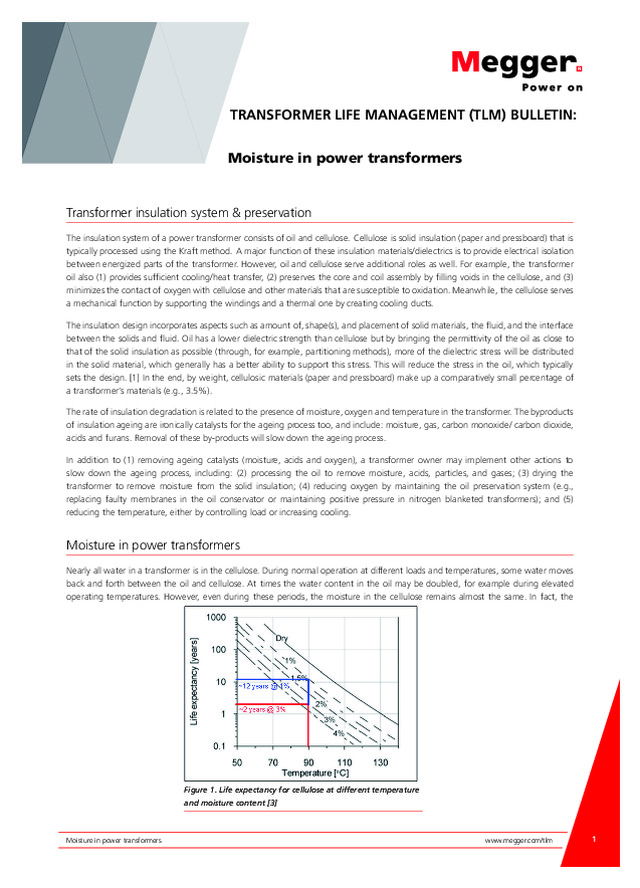
É sabido que a presença de humidade tem efeitos negativos num transformador de energia isolado a óleo mineral. Acredita-se que duplicar o teor de humidade num transformador resultará na redução do tempo de vida útil para cerca de metade. Tal consequência resultaria num retorno sobre investimento muito reduzido, tendo também um impacto na fiabilidade desde o início da vida útil. Neste primeiro boletim técnico, a Megger explica de que forma se pode tentar contrariar este tendência e ajudar a preservar as condições de um sistema de isolamento de transformadores. (Em inglês)
MEGGER
Guia Megger de Transformer Life Management — 1. Humidade em transformadores
Publicado: 27 de fevereiro de 2018 · Categoria: Cadernos técnicos
É sabido que a presença de humidade tem efeitos negativos num transformador de energia isolado a óleo mineral. Acredita-se que duplicar o teor de humidade num transformador resultará na redução do tempo de vida útil para cerca de metade. Tal consequência resultaria num retorno sobre investimento muito reduzido, tendo também um impacto na fiabilidade desde o início da vida útil. Neste primeiro boletim técnico, a Megger explica de que forma se pode tentar contrariar este tendência e ajudar a preservar as condições de um sistema de isolamento de transformadores. (Em inglês)
Deste documento
TRANSFORMER LIFE MANAGEMENT (TLM) BULLETIN: Moisture in power transformers Transformer insulation system & preservation The insulation system of a power transformer consists of oil and cellulose. Cellulose is solid insulation (paper and pressboard) that is typically processed using the Kraft method. A major function of these insulation materials/dielectrics is to provide electrical isolation between energized parts of the transformer. However, oil and cellulose serve additional roles as well. For example, the transformer oil also (1) provides sufficient cooling/heat transfer, (2) preserves the core and coil assembly by filling voids in the cellulose, and (3) minimizes the contact of oxygen with cellulose and other materials that are susceptible to oxidation. Meanwhile, the cellulose serves a mechanical function by supporting the windings and a thermal one by creating cooling ducts. The insulation design incorporates aspects such as amount of, shape(s), and placement of solid materials, the fluid, and the interface between the solids and fluid. Oil has a lower dielectric strength than cellulose but by bringing the permittivity of the oil as close to that of the solid insulation as possible (through, for example, partitioning methods), more of the dielectric stress will be distributed in the solid material, which generally has a better ability to support this stress. This will reduce the stress in the oil, which typically sets the design. [1] In the end, by weight, cellulosic...
Abrir o PDF